Playing with in-ear monitors means swapping floor wedges for earphones: each musician gets their own mix straight into their ears. For years it was something for big tours; today a band can set it up on a small budget. Here is what you need and how each piece fits in.
In short
- You need three things: IEMs that isolate, a monitor mix and something to carry it to you (a cable or a wireless bodypack).
- If you play without moving around, as on drums or keyboards, you can go wired and skip the wireless system.
- The goal is to hear yourself better at lower volume, not louder.
What changes compared with wedges
- Less volume on stage. Without wedges pointing at the microphones there is less feedback and the front-of-house mix comes out cleaner.
- The mix goes with you. You hear the same thing wherever you stand, in a small venue or on a big stage.
- They isolate you from noise. Because they seal the ear, you need less volume to hear yourself.
- They also isolate you from the audience. That is the usual drawback; an ambient microphone in the mix solves it.
What you need
| Piece | What it is for | Options |
|---|---|---|
| In-ear earphones | Isolating from noise and playing back your mix | Universal with ear tips, like KZ models, or custom-molded |
| Monitor mix | Deciding what you hear and how loud | An aux send from the mixer or a personal mixer |
| Getting the signal to you | Carrying that mix to your ears | Wired headphone amplifier or wireless system with bodypack |
| Cables | Connecting everything | 3.5 mm extension cable and 3.5 to 6.3 mm adapter |
Wired or wireless
Wired. A headphone amplifier receives the mix from an aux send on the mixer and you plug your IEMs into its output. There are no batteries or interference, and it is the cheapest option. It is the usual choice for those who stay put: drums, keyboards or stationary backing vocals.
Wireless. A transmitter connected to the mixer sends the mix by radio to a bodypack receiver on your belt, and the IEMs plug into the bodypack. It gives singers and guitarists freedom to move, at a higher price.
In both cases, the earphones plug into a normal headphone output with their 3.5 mm jack. A Bluetooth adapter, on the other hand, is no good for monitoring: it adds a delay you notice when playing.
The mix: what to put in it
- Your instrument or your voice, above everything else.
- A rhythmic reference: kick, snare or click.
- A harmonic reference: bass, guitar or keyboard.
- Some ambience, from a microphone pointed at the audience, so you do not feel shut in.
If the mixer allows it, a stereo mix helps separate the instruments. With a single aux send you will have a mono mix, which also works.
Watch your volume
Because IEMs isolate you from stage noise, you can monitor at a lower level than with wedges. Make the most of it: start low and turn up only as much as you need. Avoid playing with just one earpiece in; people often end up raising the volume on that side to compensate.
Which IEMs to start with
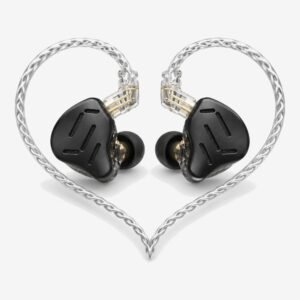
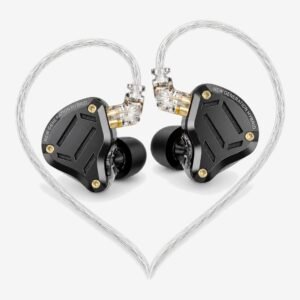
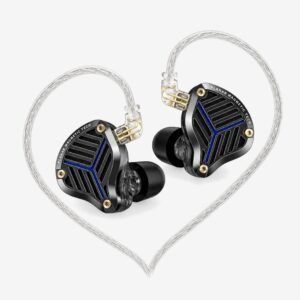
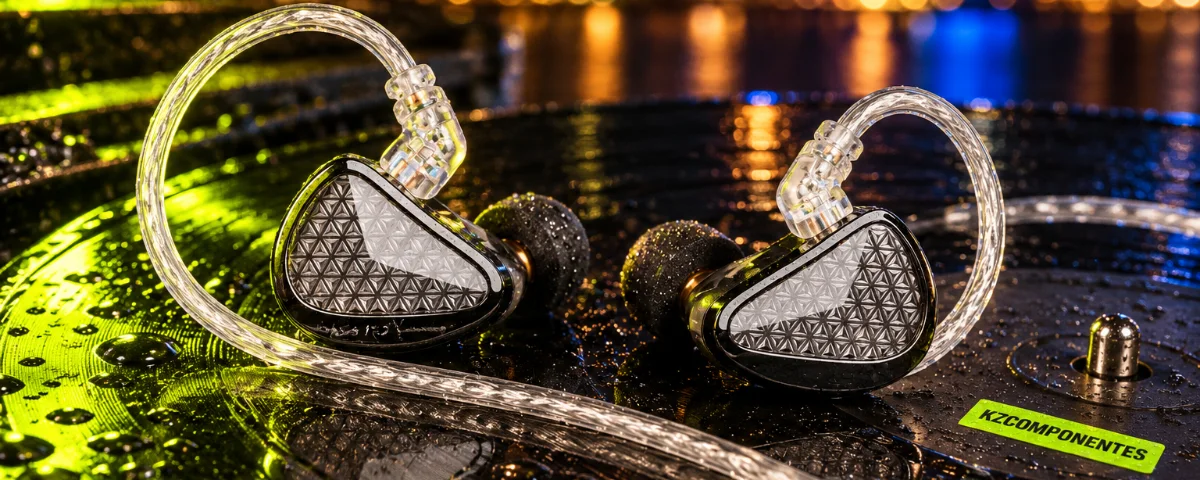
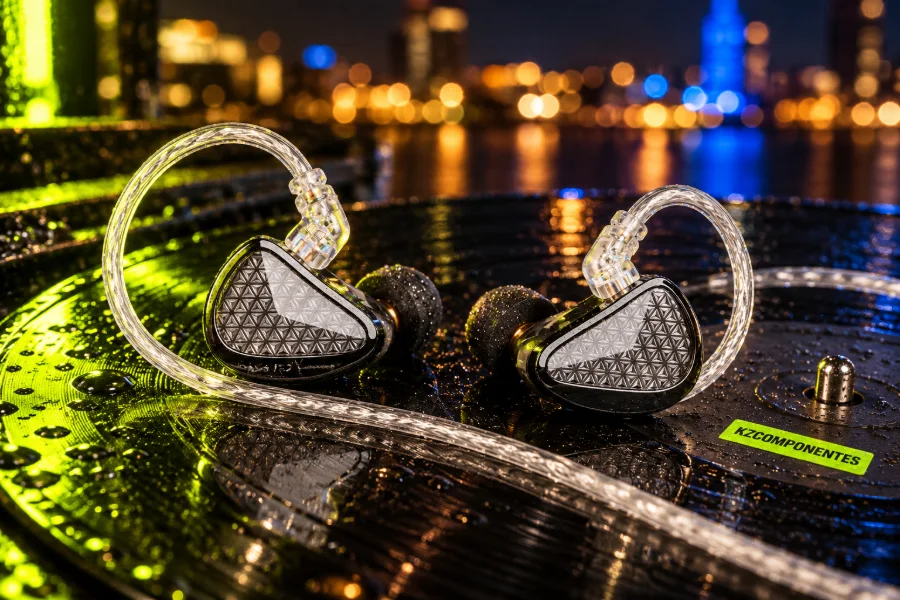
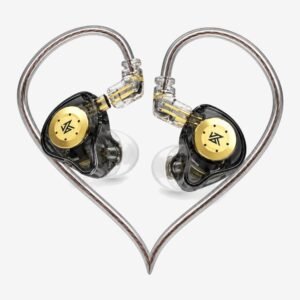
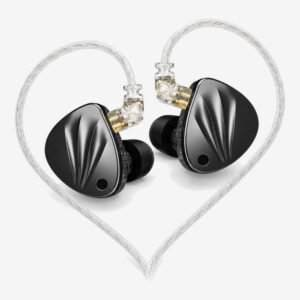
Any IEM that seals the ear well and runs the cable over the ear will do. On stage, the version without microphone is the better choice. You will find the models we recommend in the best KZ IEMs for musicians and live use and all of them together in the musicians and stage category.
Everyday earphones, Dynamic drivers, KZ, Musicians & stage
44,95 €34,95 €Select options This product has multiple variants. The options may be chosen on the product page
Everyday earphones, Hybrids, KZ, Musicians & stage
43,95 €Select options This product has multiple variants. The options may be chosen on the product page-
Hi-Fi & pro audio IEMs, KZ, Multi-BA, Musicians & stage
87,95 €Select options This product has multiple variants. The options may be chosen on the product page
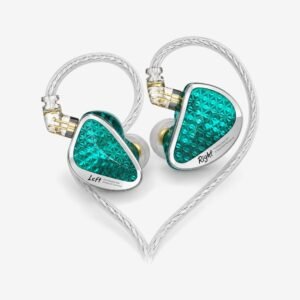
To improve isolation, the first thing is to get the ear tip size right. Foam ear tips seal better than silicone ones.
Frequently asked questions
Do I need a digital mixer?
No. The mixer just needs a free aux send to feed the monitor mix.
Can I use ordinary IEMs?
Yes, as long as they seal well. Custom-molded models isolate more, but universal ones are an affordable way to start.
Will Bluetooth earphones work?
Not for playing. Bluetooth adds a delay between what you play and what you hear.
What if my cable is too short?
A 3.5 mm extension cable adds 1, 2 or 3 metres.
Is the setup the same in a rehearsal room?
Yes. A headphone amplifier with several outputs lets the whole band rehearse with IEMs from a single mix.
Keep reading
Every KZ Componentes order comes with a 3-year warranty, 30-day returns and support from our team in Spain. Torn between models? Write to us and we will help you choose.
Your next step
Missing anything to get the most out of them?
A Bluetooth adapter makes your KZ wireless for when you are not playing. And if you don’t have them yet, the quiz tells you which model suits you.


 Español
 English